Capability Domains

One architecture of capability.

Sankofa does not work across sectors. It strengthens capability through a single institutional model, read in three tiers: the foundations a community already stands on, the transformation those foundations make visible, and the enablement that lets capability multiply beyond us.

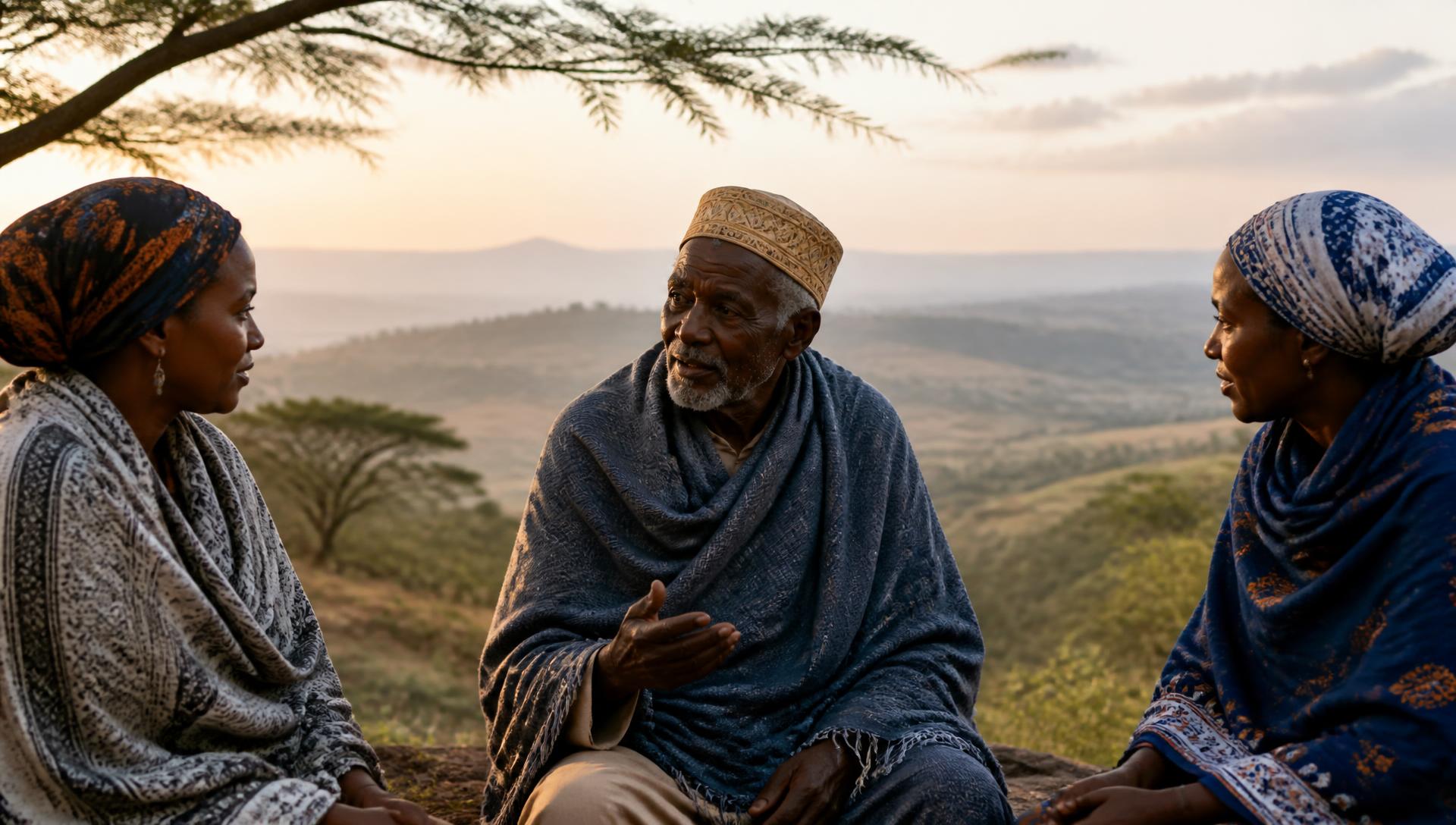
A circle of women and an elder gathered under an acacia tree on the Kenyan highlands, in quiet conversation at golden light
Capability is already present in the people we work with. The architecture only makes it legible.
  1. People
  2. Communities
  3. Institutions
  4. Evidence
  5. Technology

Tier One

Foundational Capability

Why Sankofa exists. Everything begins by recognising and strengthening the foundations upon which communities already stand: identity, people, and the institutions that hold them together.

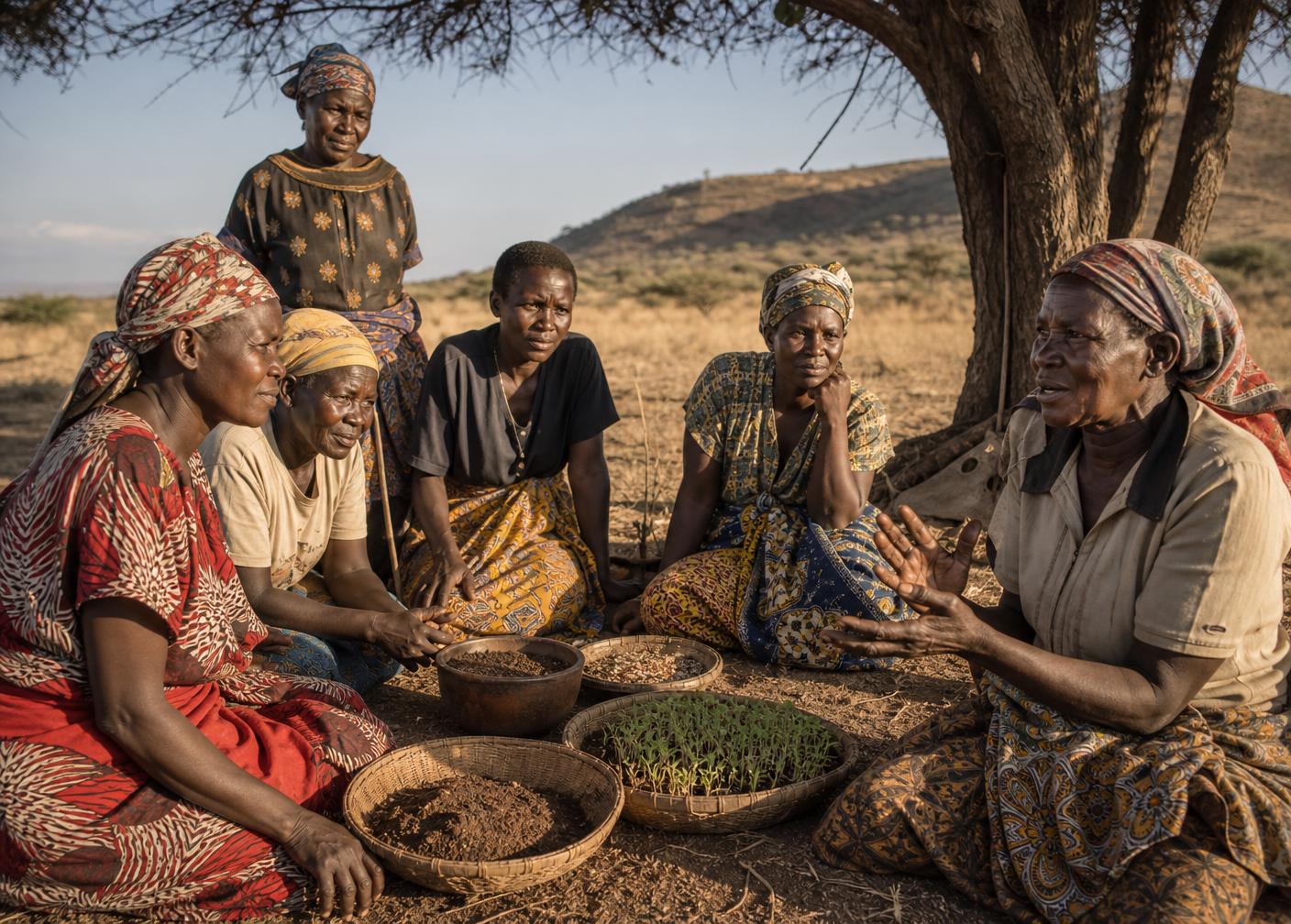
Women from a village gathered under an acacia tree for a structured field study session, examining soil and seedling samples in clay bowls
Capability is discovered in the field, not the classroom — the ground everything else stands on.

Foundation I

Heritage & Cultural Continuity

Identity is the foundation of capability. Communities carry knowledge, memory and practice across generations, and Sankofa begins by recognising and strengthening those foundations.

Philosophy

Heritage is not a museum. It is the live scaffolding by which communities remember who they are and negotiate what they are becoming. This domain treats heritage as infrastructure, not sentiment.

Practice

  • Documenting living cultural institutions on their own terms
  • Supporting intergenerational transmission of language and practice
  • Protecting the authorship of communities over their own heritage

Whose knowledge and whose institutions carry this heritage — and what structural conditions let them keep doing so?
Foundation II

Human Capability & Learning

People are the primary carriers of capability. Learning strengthens individuals who, in turn, strengthen the communities they belong to.

Philosophy

Learning is not delivery. It is the structured expansion of what a person can do without needing continued external support. Human capability is Sankofa's most direct measure of enduring impact.

Practice

  • Building curricula around existing capability, not perceived deficit
  • Returning evidence of learning to the learner as an asset
  • Treating credentialing as an ownership question

What can a learner do at the end that they could not do at the beginning — and who now owns that evidence?

Foundation III

Community Institutions & Governance

Capability becomes sustainable when it is embedded within trusted institutions. Strong institutions preserve capability beyond individuals and beyond projects.

Philosophy

African communities are not ungoverned. They are governed by institutions that funders often cannot see. Sankofa's work is to make these institutions structurally visible and to strengthen their capacity to hold their own evidence.

Practice

  • Mapping community institutional forms rather than replacing them
  • Supporting local governance to hold its own data
  • Designing evidence flows that respect existing authority

Which institutions already govern this space — and how does what we do make them stronger?

Tier Two

Community Transformation

Where capability becomes visible. Strengthened foundations show themselves in livelihoods, in wellbeing, and in the ecological systems on which future capability depends.

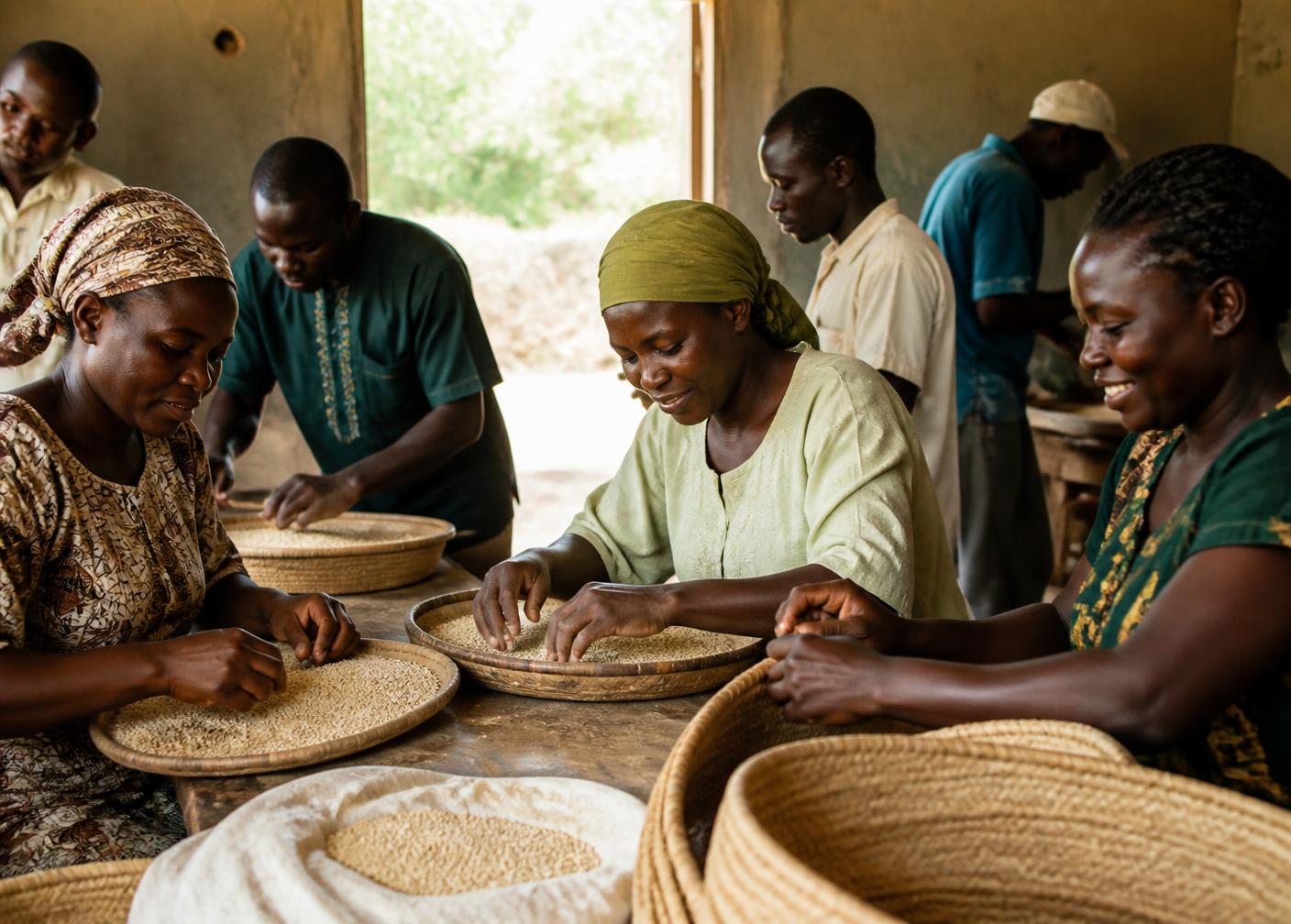
Women and men sorting grain together in a cooperative workshop lit by daylight
Livelihoods, wellbeing and ecological stewardship — capability made visible.

Transformation I

Livelihoods & Inclusive Enterprise

Strengthening economic capability and opportunity, so that communities hold more ownership, evidence and standing than when the work began.

Philosophy

Enterprise is a Sankofa concern only when it strengthens the community's structural position. A livelihood programme that generates income but leaves ownership elsewhere is not yet finished.

Practice

  • Working with existing producer groups, women's collectives, cooperatives
  • Placing evidence of enterprise viability inside the community
  • Designing programmes whose ending is a handover, not a silence

When the programme ends, who owns the enterprise, the evidence, and the relationships it created?

Transformation II

Health & Community Wellbeing

Strengthening healthy, resilient communities capable of preventing, responding to and recovering from health challenges with their own institutions intact.

Philosophy

Health is not a delivery programme that arrives from outside. It is the accumulated capability of a community to keep itself well, to recognise danger early, and to respond on its own terms. This domain treats community health as an expression of governance and resilience.

Practice

  • Building disease surveillance around community knowledge and reporting
  • Supporting locally owned health education and behaviour change
  • Strengthening outbreak preparedness and response capability
  • Placing maternal, child and nutrition evidence in community hands
  • Designing digital health tools that increase local agency

What health capability already exists in this community — and what would let it prevent, respond and recover on its own terms?

Transformation III

Climate & Ecological Stewardship

Protecting the ecological systems upon which future capability depends, with Africa's own ecological knowledge at the centre.

Philosophy

Ecological stewardship in Africa did not begin with the climate crisis. It is held in landscape practices, pastoral systems, agroecological methods, and community land tenure that predate the language now used to describe them.

Practice

  • Making indigenous ecological knowledge legible to policy
  • Strengthening community land and water governance
  • Documenting evidence that flows from practice, not from templates

What ecological capability already exists here — and what structural recognition would let it thrive?

Tier Three

Enablement & Multiplication

How capability travels. Evidence, knowledge systems and digital infrastructure carry what has been reclaimed and reorganised beyond the community that first held it.

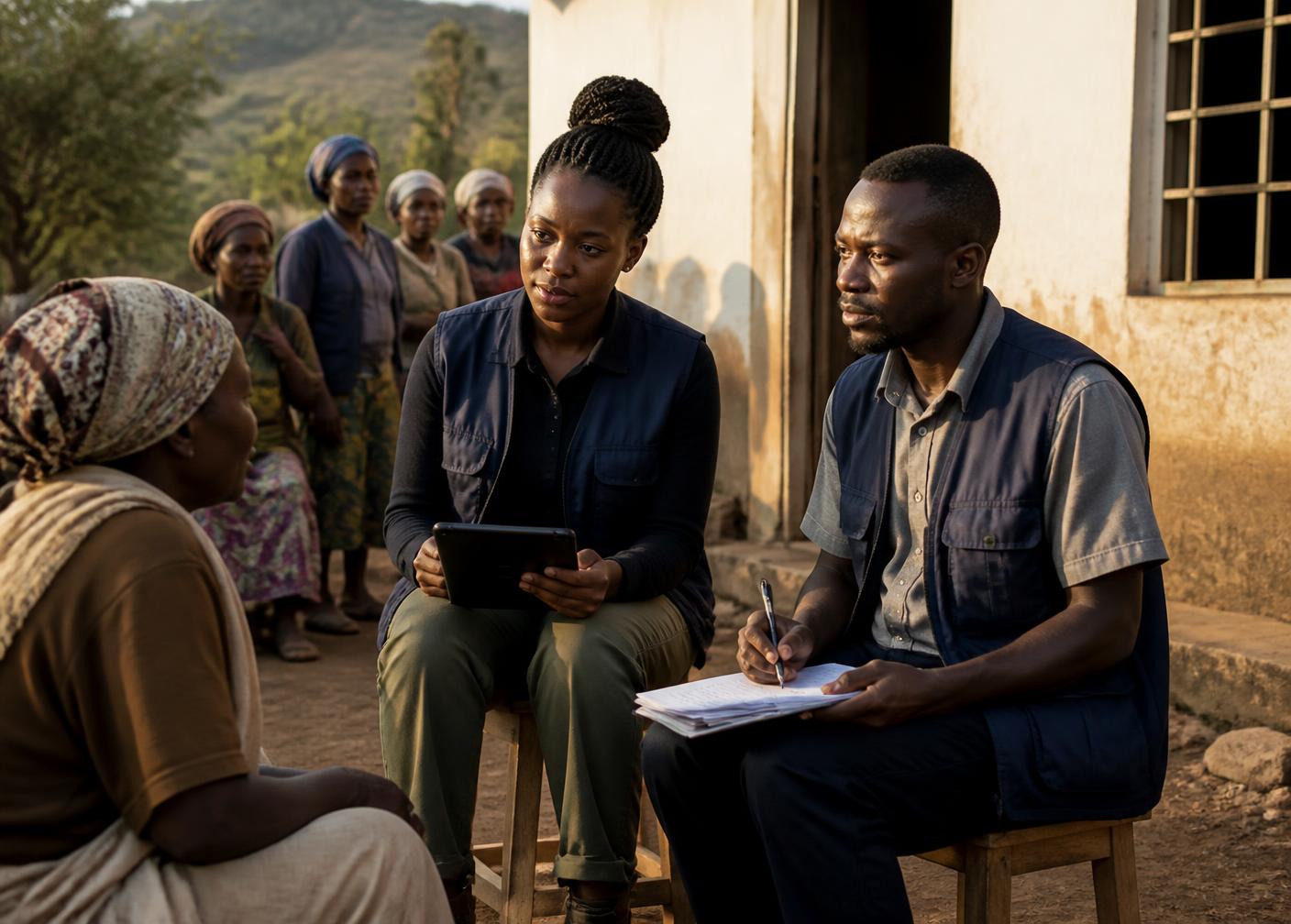
Field researchers recording evidence in conversation with community members outside a rural health post
Evidence, knowledge and digital systems — how capability carries itself onward.

Enablement I

Evidence, Research & Field Intelligence

Trusted evidence, field research, verification, monitoring, evaluation and learning — so decisions about communities can be made with, and by, those communities.

Philosophy

Evidence is not an extractive activity. It is a discipline of trust: data that communities can verify, researchers can defend, and decision makers can act on with confidence. This domain makes the field visible to itself before making it visible to others.

Practice

  • Designing digital field surveys that communities can read and contest
  • Conducting household, baseline and endline studies with transparent methods
  • Running monitoring, evaluation and impact measurement that returns findings to the field
  • Facilitating community consultations and needs and capability assessments
  • Carrying out verification exercises that protect data integrity
  • Applying AI-assisted analytics only where human judgement remains accountable

Who can verify this evidence, who can contest it, and who owns the decision it informs?

Enablement II

Research & Knowledge Systems

Institutional memory, knowledge preservation, research, publication, communities of practice and learning ecosystems that let capability compound across generations.

Philosophy

Sankofa's Living Library is a research institution in miniature. Its rule is simple: nothing is published that the community it describes could not read, contest, and own.

Practice

  • Peer review that includes community authors
  • Publication with explicit consent metadata
  • Return of findings to the community in an accessible form

Could the people this evidence describes read it, contest it, and remain its authors?

Enablement III

Digital & Evidence Infrastructure

Technology exists to enable every other capability. It is not the destination; it is the amplifier of learning, research, collaboration and evidence.

Philosophy

Technology serves capability; never the reverse. The digital layer — HIPO, Sankofa Learn, Sankofa Field, the Commons — exists to make African capability legible to itself and durable across generations. It is one expression of Capability Infrastructure, never its identity.

Practice

  • Modelling data so communities remain the primary rights-holders
  • Building interoperable systems rather than closed platforms
  • Reserving architectural seams for future institutional needs

Does this system leave the community holding more capability than before — including the capability to leave the system?

The discipline beneath the domains

Nine domains. One method.

No domain is a sector, and none stands alone. Each is a place where the same discipline is applied without variation. Foundations are recognised, transformation is made visible, and enablement carries the pattern outward — until the capability continues without us. Technology appears last because it is the amplifier of everything before it, never the identity of the institution.

Philosophy and Capability Infrastructure, held together long enough to become enduring community impact.

The Four Rhythms

  1. 01Listen

    Attention before intervention.

  2. 02Reclaim

    Name the capability already present.

  3. 03Reorganize

    Place it in a form that lets it grow.

  4. 04Multiply

    Let it carry itself beyond us.